APOD // ACTIVE

Astronomy Picture of the Day

Witness the cosmos through the lens of NASA's most profound observatories. Today's feature unveils the intricate filamentary structures of the Veil Nebula.

Explore More
Image of a face-on spiral galaxy.
LIVE TELEMETRY

Earth EPIC 3D

Earth Polychromatic Imaging Camera (EPIC). Positioned at the Earth-Sun Lagrange point 1, capturing daily, full-disc imagery of our home planet from deep space.

Latitude

—

Longitude

—

Capture date

—

Pick a capture on the globe

Featured Missions

Deep space exploration vanguard pushing the boundaries of our solar system and beyond, highlighting technological breakthroughs and active spaceflight initiatives.

UPCOMING // 2026-09-19

Mission Status: Go for Launch

NAME: Electron | Owl By The Dozen (StriX Launch 12)

LOCATION: Rocket Lab Launch Complex 1, Mahia Peninsula, New Zealand
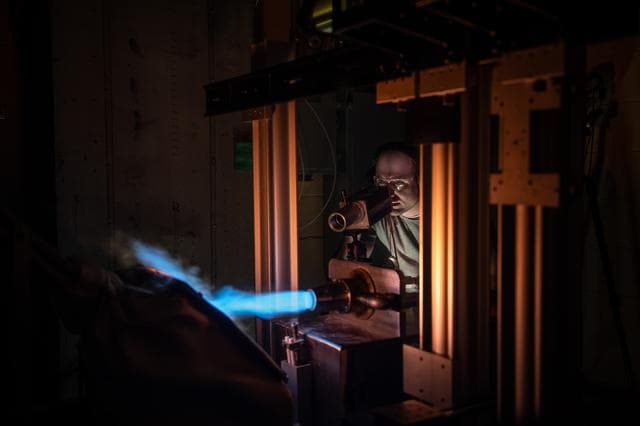
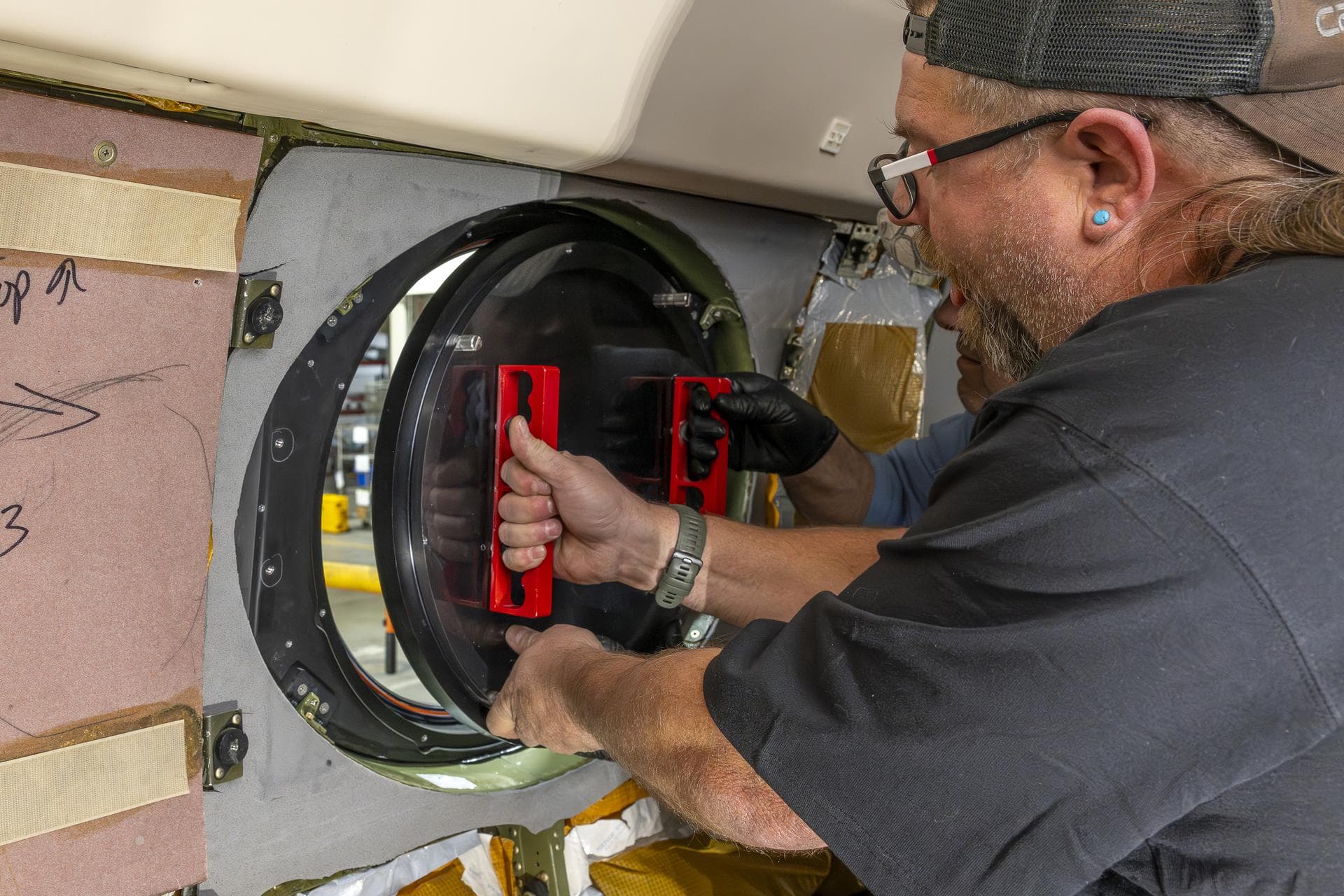
Engineering Design Unit (EDU) from a NASA customer, Radian Aerospace, being tested in the burner rig
NASA Glenn’s Natural Gas/Oxygen Burner Rig is used to study the high temperature performance of various metal alloys, ceramics, and protective coatings for aero and space propulsion systems. The burner rig provides an easily accessible and economical method to simulate engine operating conditions to understand thermomechanical and thermochemical degradation of materials and structures. In the photo, Materials Research Engineer Michael Presby uses an infrared pyrometer to monitor the surface temperature of the material for a test on February 23, 2024. Photo Credit: (NASA/Sara Lowthian-Hanna)
CenterGRC
Date Created2024-02-23
Research Technology
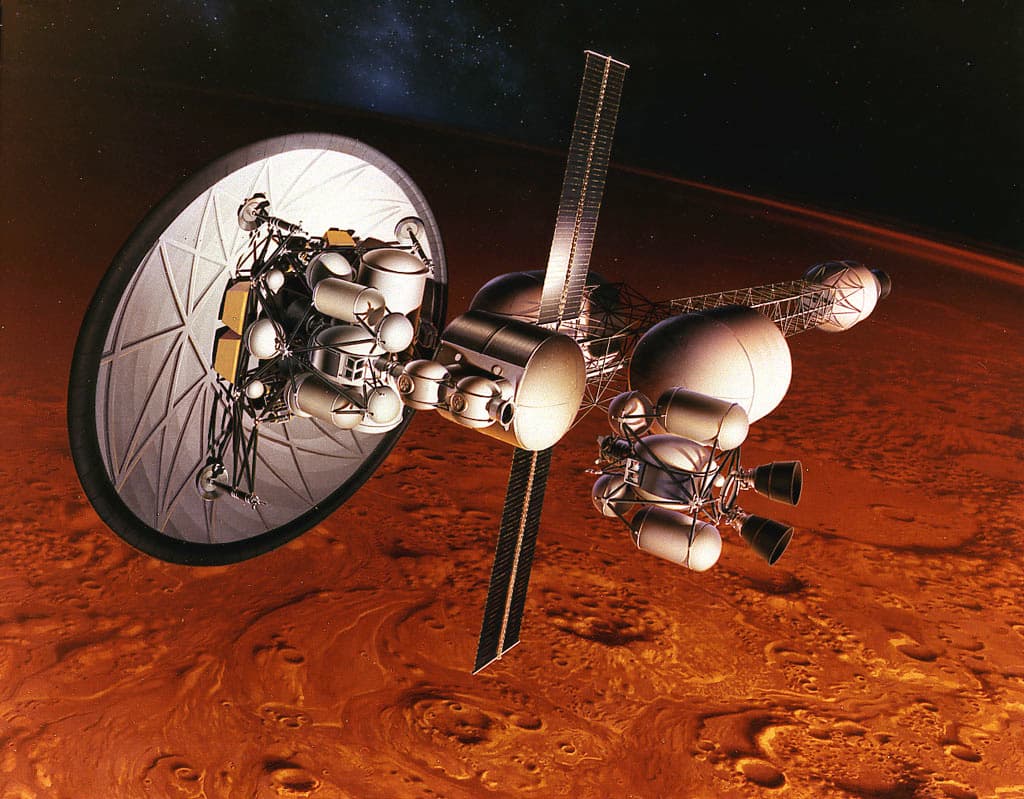
Originally investigated in the 1960's by Marshall Space Flight Center plarners as part of the Nuclear Energy for Rocket Vehicle Applications (NERVA) program, nuclear-thermal rocket propulsion has been more recently considered in spacecraft designs for interplanetary human exploration. This artist's concept illustrates a nuclear-thermal rocket with an aerobrake disk as it orbits Mars.
CenterMSFC
Date Created1960-01-01
Microgravity
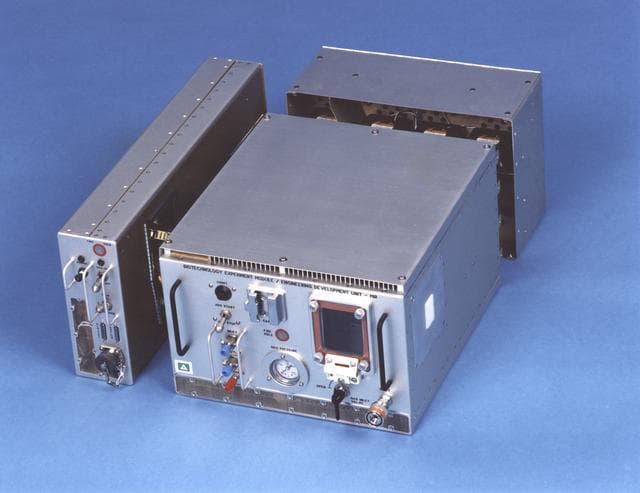
Exterior view of the NASA Bioreactor Engineering Development Unit flown on Mir. The rotating wall vessel is behind the window on the face of the large module. Control electronics are in the module at left; gas supply and cooling fans are in the module at back. The NASA Bioreactor provides a low turbulence culture environment which promotes the formation of large, three-dimensional cell clusters. The Bioreactor is rotated to provide gentle mixing of fresh and spent nutrient without inducing shear forces that would damage the cells. Due to their high level of cellular organization and specialization, samples constructed in the bioreactor more closely resemble the original tumor or tissue found in the body. The work is sponsored by NASA's Office of Biological and Physical Research. The bioreactor is managed by the Biotechnology Cell Science Program at NASA's Johnson Space Center (JSC). NASA-sponsored bioreactor research has been instrumental in helping scientists to better understand normal and cancerous tissue development. In cooperation with the medical community, the bioreactor design is being used to prepare better models of human colon, prostate, breast and ovarian tumors. Cartilage, bone marrow, heart muscle, skeletal muscle, pancreatic islet cells, liver and kidney are just a few of the normal tissues being cultured in rotating bioreactors by investigators.
CenterMSFC
Date Created1996-01-01

Celestial Near-Misses

Upcoming asteroid close approaches monitored by Near-Earth Object Observations.

260277 (2004 TR12)
MONITORED
Approach date2026-09-18
Miss Distance0.20 AU
Velocity15.45 km/s
(2007 AM)
MONITORED
Approach date2026-09-18
Miss Distance0.46 AU
Velocity12.90 km/s
(2009 YS)
MONITORED
Approach date2026-09-18
Miss Distance0.39 AU
Velocity14.28 km/s
(2015 YA)
MONITORED
Approach date2026-09-18
Miss Distance0.28 AU
Velocity9.83 km/s
(2016 FZ12)
MONITORED
Approach date2026-09-18
Miss Distance0.31 AU
Velocity17.44 km/s
(2016 RS)
MONITORED
Approach date2026-09-18
Miss Distance0.25 AU
Velocity7.30 km/s
(2017 XD)
MONITORED
Approach date2026-09-18
Miss Distance0.32 AU
Velocity37.05 km/s
(2006 SB142)
MONITORED
Approach date2026-09-17
Miss Distance0.50 AU
Velocity3.84 km/s
(2013 ST)
MONITORED
Approach date2026-09-17
Miss Distance0.26 AU
Velocity14.26 km/s
(2016 VH2)
MONITORED
Approach date2026-09-17
Miss Distance0.24 AU
Velocity9.93 km/s
(2019 GM1)
MONITORED
Approach date2026-09-17
Miss Distance0.08 AU
Velocity3.64 km/s
514571 (1996 RY3)
MONITORED
Approach date2026-09-16
Miss Distance0.37 AU
Velocity17.99 km/s
(2007 GU4)
MONITORED
Approach date2026-09-16
Miss Distance0.14 AU
Velocity17.56 km/s
(2007 QE3)
MONITORED
Approach date2026-09-16
Miss Distance0.09 AU
Velocity18.19 km/s
(2012 HH8)
MONITORED
Approach date2026-09-16
Miss Distance0.35 AU
Velocity29.36 km/s
(2015 SO2)
MONITORED
Approach date2026-09-16
Miss Distance0.49 AU
Velocity17.86 km/s
(2015 TN21)
MONITORED
Approach date2026-09-16
Miss Distance0.47 AU
Velocity26.88 km/s
(2016 TH10)
MONITORED
Approach date2026-09-16
Miss Distance0.16 AU
Velocity10.41 km/s
(2019 UN1)
MONITORED
Approach date2026-09-16
Miss Distance0.29 AU
Velocity14.01 km/s